Urban Spatiotemporal Sensing
Integrating multi-source urban sensing data to represent spatial structure, functional semantics, and dynamic change.
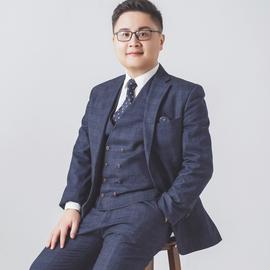
Jinzhou Cao is an Associate Professor and master’s supervisor at the College of Artificial Intelligence, Shenzhen Technology University. He serves as Executive Director of the Spatiotemporal Intelligence Research Center and Deputy Head of the Department of Data Science. He received his Ph.D. from the State Key Laboratory of Information Engineering in Surveying, Mapping and Remote Sensing (LIESMARS), Wuhan University, and was a visiting scholar at the University of Washington. Before joining SZTU, he worked at the Guangdong Key Laboratory of Urban Informatics, Shenzhen University, as a postdoctoral researcher and specially appointed associate research fellow.
His research focuses on spatiotemporal big data mining, urban computing, Geo-AI, multimodal urban foundation models, and human mobility analytics. He has led more than ten research projects funded by the National Natural Science Foundation of China, the China Postdoctoral Science Foundation, Guangdong Basic and Applied Basic Research Foundation, Shenzhen Natural Science Foundation, and open funds from key laboratories of the Ministry of Natural Resources. He has published more than 50 papers in journals and conferences including Information Fusion, ISPRS Journal of Photogrammetry and Remote Sensing, Computers, Environment and Urban Systems, International Journal of Geographical Information Science, Cities, AAAI, and ICASSP. Two papers are ESI Highly Cited Papers, and his work has received more than 1,500 Google Scholar citations. He holds 24 granted invention patents and 3 software copyrights, and received the First Prize of the Surveying and Mapping Science and Technology Award.
Download his resumé(En) or resumé(Ch).
Associate Professor; Executive Director of STIC; Deputy Head of Data Science, 2026.04-present
College of Artificial Intelligence, Shenzhen Technology University
Assistant Professor; Deputy Head of Data Science, 2022.04-2026.03
College of Artificial Intelligence, Shenzhen Technology University
Specially Appointed Associate Research Fellow, 2021.08-2022.03
Guangdong Key Laboratory of Urban Informatics, Shenzhen University
Postdoctoral Fellow, 2019.07-2021.07
Shenzhen University; advisor: Academician Qingquan Li
Ph.D. in Engineering, urban data mining, 2013-2019
LIESMARS, Wuhan University
Visiting Scholar, THINK LAB, 2017-2018
School of Civil and Environmental Engineering, University of Washington
B.S. in Remote Sensing Science and Technology, 2009-2013
School of Remote Sensing and Information Engineering, Wuhan University
Feel free to contact me directly or to schedule an appointment.
Integrating multi-source urban sensing data to represent spatial structure, functional semantics, and dynamic change.
Building multimodal representations and foundation models for urban understanding, prediction, and decision support.
Combining Geo-AI, social sensing, and knowledge reasoning for urban governance and spatial decision-making.
Analyzing travel behavior, activity networks, and urban flows to support transport and planning applications.
The Urban Spatial Intelligence Lab is Prof. Jinzhou Cao's research group and is affiliated with the Spatio-Temporal Intelligence Center at Shenzhen Technology University. The lab works on urban intelligent computing, urban spatial representation, Geo-AI, multimodal urban sensing, and human mobility analytics.

The center serves low-altitude economy, smart cities, intelligent equipment, and embodied intelligence by advancing spatio-temporal sensing, cognition, and decision-making across three directions: autonomous sensing, navigation, and positioning; urban spatial intelligence and foundation models; and embodied spatial intelligence and autonomous operation.
Learn about the center's mission, team, and development context.
Explore autonomous sensing, navigation, and positioning; urban spatial intelligence and foundation models; and embodied spatial intelligence and autonomous operation.
Follow recent papers, projects, and academic activities from the center.